
▸ About
About.
Matthieu Boissavy
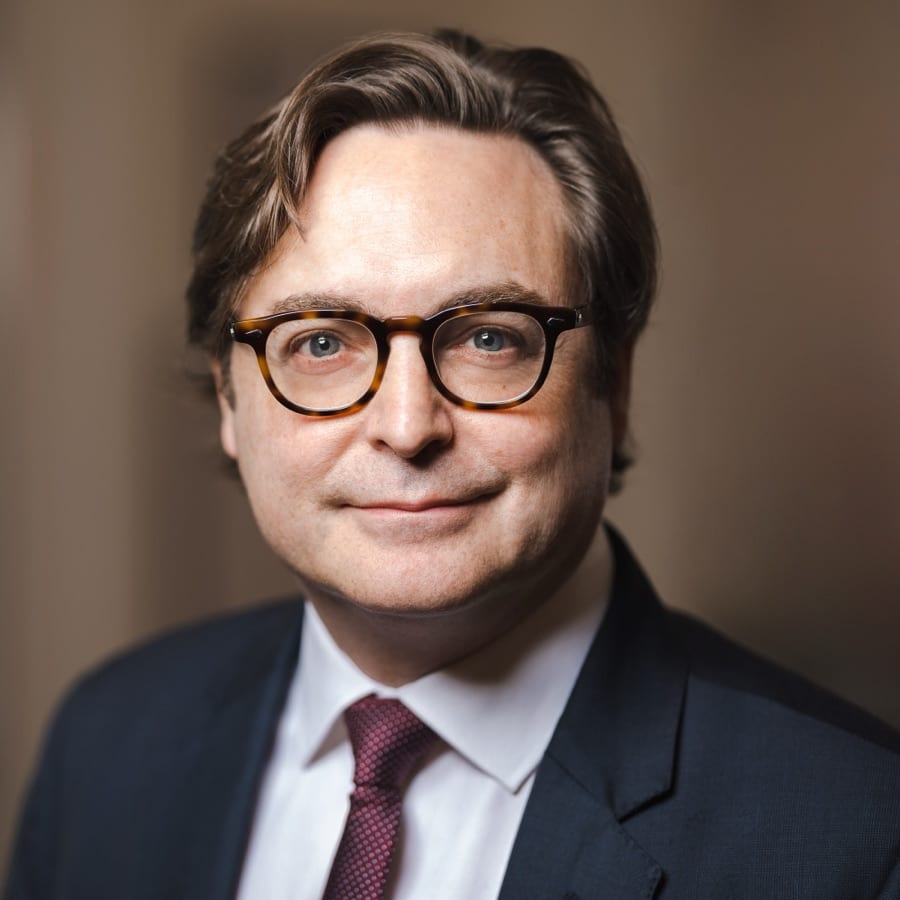
Matthieu Boissavy is an attorney admitted to the Paris and New York bars, and an accredited mediator (Paris Court of Appeal).
Admitted to the Paris Bar in 1993 and the New York Bar in 1999, he holds a Master of Comparative Jurisprudence from New York University School of Law (Fulbright Scholar), a postgraduate degree (DEA) in private law and a postgraduate degree (DESS) in international trade law from Université Paris X, and completed a program in private international law at the Hague Academy of International Law. In 1995, he was elected 11th Secretary of the Conférence du Barreau de Paris, an annual distinction awarded to young Paris advocates for courtroom oratory.
Trained in both major legal systems — civil law and common law — he represents individuals, companies, states, and public authorities in crisis situations and disputes, whether as claimant or defendant. He practices primarily in criminal and disciplinary law, art and media law, compliance and human rights, intellectual property, press offenses, and art market law. His caseload includes international disputes, notably in international criminal law and the restitution of cultural property.
When not retained as counsel, he is appointed as a mediator or arbitrator. In that capacity, he handles disputes between holders of intellectual property rights — in publishing, audiovisual production, and the performing arts — between participants in the art market, and between partners or members of companies and associations.
Actively engaged in the life of the Bar, he served as an elected member of the Paris Bar Council (Conseil de l’Ordre) from 2017 to 2019, then as a member of the French National Bar Council (Conseil national des barreaux) for the 2021-2023 term, where he served as vice-chair of the Civil Liberties and Human Rights Committee. In that role, he developed expertise in attorneys’ freedom of expression, professional privilege during searches and seizures, the ethics of criminal defense, and the relationship between attorneys and judges. He took part in the work of the Joint Advisory Council on the Ethics of the Judge-Attorney Relationship.
He is the author of numerous articles on law, the legal profession, and the justice system. He has contributed to five collective works: Influencer la démocratie, démocratiser l’influence (2004); Reconstruire la justice (2006); Manifeste pour la justice (2011); Compliance et droits de la défense (2024); Défendre (2025).
He is a member of Avocats Ensemble (ACE), the American Bar Association, the New York City Bar Association, the Association des Avocats Pénalistes (ADAP, the French association of criminal defense lawyers), the Association des avocats praticiens du droit de la presse (AAPDP, the French association of media law practitioners), and the Cercle K2.
The method
Oratorik’s motto — Juste avec les mots, le droit et l’empathie — reflects a multidisciplinary method, the ADRESSE© method (Arts, Doctrine, Rhetoric, Ethics, Sciences of behavior, Sociology, Economics).
“To judge is to love to listen, to strive to understand, and to be willing to decide.”
— Pierre Drai, former First President of the Cour de cassation (France’s highest judicial court)
Original French: « Juger, c’est aimer écouter, essayer de comprendre et vouloir décider. »
This formula illuminates the horizon of every advocate: to secure the judge’s attention, give them the means to understand the case being defended, win their conviction, and persuade them of the fairness of the proposed solution. The ADRESSE© method is presented in detail here.
The course of an engagement
- First conversation Review of the legal situation. If representation is possible, discussion of the terms. If not, a recommendation, where possible, of another attorney or mediator.
- Engagement letter A fee estimate is prepared, and an engagement letter is drafted and signed, including the fee agreement.
- Building the file Transmission of the documents needed to carry out the engagement, and preparation for its execution.
- Carrying out the engagement Regular updates on the progress of the engagement through to its conclusion.
Sharing knowledge
Oratorik shares its expertise through lectures and training programs, held in person or remotely. Matthieu Boissavy speaks and teaches on criminal law and procedure, media law, art law, the ethics of the legal profession, rhetoric and the practice of oral advocacy, advocacy, negotiation, and mediation.
Training sessions and webinars are designed around participants’ needs and can be organized around jointly defined topics.